
Namit Malhotra's Ramayana: The Film That Could Redefine Indian Cinema's Global Business and VFX Landscape
For decades, Indian cinema has dreamed of creating a film that could stand shoulder-to-shoulder with the world's biggest cinematic spectacles. While Bollywood has produced countless blockbusters and unforgettable stories, one challenge has remained constant—matching Hollywood's technical excellence, especially in visual effects (VFX), large-scale world-building, and global production standards.
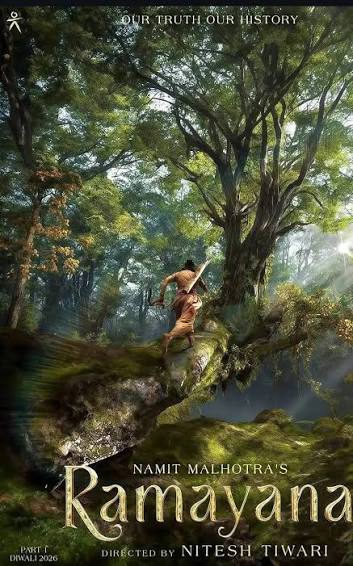
That dream may finally be taking shape through Namit Malhotra's Ramayana.
Unlike many mythological adaptations that primarily focus on storytelling or star power, Ramayana is being positioned as something much larger. It is an ambitious business venture, a technological milestone, and perhaps the most significant attempt yet to transform India into a global filmmaking powerhouse.
More than just another movie, Ramayana represents a vision where Indian mythology meets world-class filmmaking. If successful, it could permanently change how the global entertainment industry views Indian cinema.
A Producer Who Thinks Beyond Box Office
Namit Malhotra is not a traditional film producer.
He is widely recognized as the founder of Prime Focus and the driving force behind DNEG, one of the world's leading visual effects and animation companies. Unlike producers who primarily invest in scripts and actors, Malhotra's career has been built around technology, innovation, and visual storytelling.
DNEG has contributed to some of Hollywood's biggest films, including projects from franchises like Dune, Interstellar, Inception, Tenet, Blade Runner 2049, and several Marvel productions. The company has also won multiple Academy Awards for Best Visual Effects, making it one of the most respected VFX studios in the world.
This experience gives Malhotra a unique advantage. He understands both filmmaking and the business of cutting-edge visual effects at a global level.
Why Ramayana Is Different
India has produced many mythological films over the years. Some have become commercial successes, while others have struggled because audiences increasingly expect international-quality visual experiences.
Modern viewers compare every fantasy film with global benchmarks such as Avatar, The Lord of the Rings, and Dune. Spectacular storytelling alone is no longer enough. The visuals must also convince audiences that the fictional world truly exists.
This is where Ramayana stands apart.
Instead of treating VFX as a finishing touch added after shooting, the project has reportedly been designed with visual effects integrated into the filmmaking process from the very beginning.
That approach reflects Hollywood's production philosophy, where pre-visualization, digital environments, virtual production, and VFX planning become central to storytelling rather than post-production fixes.
The Business Strategy Behind the Film
From a business perspective, Ramayana is one of India's most ambitious entertainment investments.
Instead of aiming only for domestic box office success, the film appears designed as a global intellectual property (IP).
This distinction matters.
A successful IP extends beyond cinema into multiple revenue streams, including:
Streaming rights
International theatrical releases
Merchandise
Video games
Books
Theme park attractions
Licensing
Animation
Spin-off series
Hollywood has mastered this model for decades.
Franchises like Harry Potter, Star Wars, and the Marvel Cinematic Universe generate billions of dollars because audiences continue engaging with their worlds long after the films leave theaters.
If Ramayana succeeds creatively and commercially, it could become India's strongest mythological franchise with similar long-term potential.
Raising the Standard for Indian VFX
Perhaps the film's greatest contribution may not be its box office collections.
Its biggest legacy could be the transformation of India's visual effects ecosystem.
Historically, Indian VFX companies have often worked as outsourcing partners for Hollywood studios.
While this has generated employment and technical expertise, much of the creative leadership has remained overseas.
Projects like Ramayana have the potential to reverse that trend.
Instead of merely executing foreign productions, Indian artists could increasingly lead some of the world's most technically sophisticated storytelling projects.
That shift would represent an important evolution for India's creative economy.
Global Collaboration Without Losing Indian Identity
One of the most encouraging aspects of Ramayana is its apparent production philosophy.
Rather than attempting to imitate Hollywood, the project seeks to combine international filmmaking expertise with one of India's most revered epics.
This balance is important.
The goal is not to make an "Indian version" of a Hollywood fantasy film.
Instead, the objective appears to be presenting an authentic Indian story using the highest global production standards.
That distinction could become the film's greatest strength.
Technology Is Becoming the Hero
In earlier decades, discussions about films revolved around actors.
Today, technology has become equally important.
Modern filmmaking depends on:
Motion capture
Virtual production
Real-time rendering
Artificial intelligence-assisted workflows
Digital environments
Performance capture
Advanced compositing
High-end simulation technologies
These tools allow filmmakers to create worlds that would be impossible to build physically.
Given Namit Malhotra's background, many industry observers expect Ramayana to showcase some of the most advanced visual production techniques ever attempted in Indian cinema.
If executed successfully, the film could become a benchmark for future Indian productions.
Creating Confidence Among Global Investors
Large-scale filmmaking requires enormous financial confidence.
International investors generally support industries where projects demonstrate predictable quality and global commercial potential.
If Ramayana proves that Indian studios can consistently deliver world-class cinematic experiences, it could encourage greater international investment in Indian entertainment.
This would benefit not just blockbuster productions but also animation, gaming, OTT content, virtual production, and emerging creative technologies.
Employment and Skill Development
The impact of Ramayana extends far beyond cinema halls.
Large VFX productions create opportunities for:
Digital artists
Animators
Concept designers
Lighting specialists
Texture artists
Compositors
Technical directors
Software engineers
Production managers
Motion capture specialists
Thousands of professionals may contribute to a project of this scale.
Moreover, such productions encourage educational institutions to expand training in visual effects, animation, and digital filmmaking, helping prepare the next generation of creative talent.
A New Benchmark for Indian Storytelling
For years, Indian filmmakers have debated whether audiences prefer mythology or contemporary stories.
The truth is that audiences embrace compelling storytelling regardless of genre.
What matters is execution.
Ramayana offers an opportunity to present one of India's oldest stories in a cinematic language that resonates with modern audiences worldwide.
If successful, it may encourage studios to revisit other timeless Indian epics and historical narratives with renewed ambition and technical sophistication.
Risks Cannot Be Ignored
Despite the excitement surrounding the project, challenges remain.
High-budget films carry significant financial risk.
Audience expectations are exceptionally high, particularly when adapting a sacred and culturally significant text. The film must balance artistic interpretation with respect for diverse traditions.
There is also the challenge of maintaining consistent visual quality across what is expected to be an effects-heavy production. In today's connected world, even small shortcomings can become major talking points online.
Commercial success will depend not only on impressive visuals but also on emotional storytelling, strong performances, memorable music, and a screenplay that connects with audiences across cultures.
Why the Industry Is Watching Closely
Every major film industry experiences defining moments.
Hollywood had Jurassic Park.
New Zealand established itself as a filmmaking destination through The Lord of the Rings.
South Korea transformed its global reputation through sustained investment in cinema and television.
Many industry professionals believe Ramayana has the potential to become one of those defining moments for Indian cinema.
If it succeeds, it could demonstrate that India can produce large-scale cinematic spectacles rooted in its own culture while meeting the technical expectations of a worldwide audience.
Final Thoughts
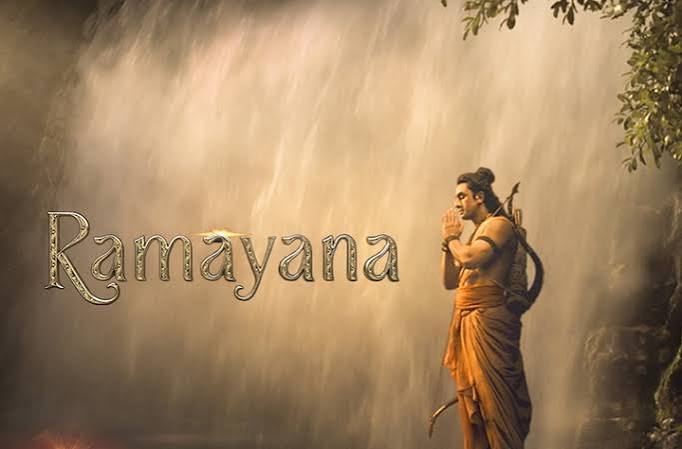
Namit Malhotra's Ramayana is much more than another big-budget movie. It represents an ambitious effort to combine India's rich storytelling heritage with cutting-edge filmmaking technology and a long-term global business strategy.




Its true success will not be measured solely by opening weekend collections. Instead, its legacy may lie in how it influences investment, encourages technological innovation, creates skilled jobs, inspires filmmakers, and reshapes perceptions of Indian cinema on the world stage.
Whether it ultimately becomes a commercial blockbuster or simply a significant industry milestone, Ramayana has already sparked an important conversation about the future of Indian filmmaking. It reflects a growing confidence that India can create stories of global scale without compromising its cultural identity.
In many ways, that may be the film's greatest achievement even before the final credits roll.